Launch offer — valid today only

📄 Digital book in PDF · read it on your phone or print it

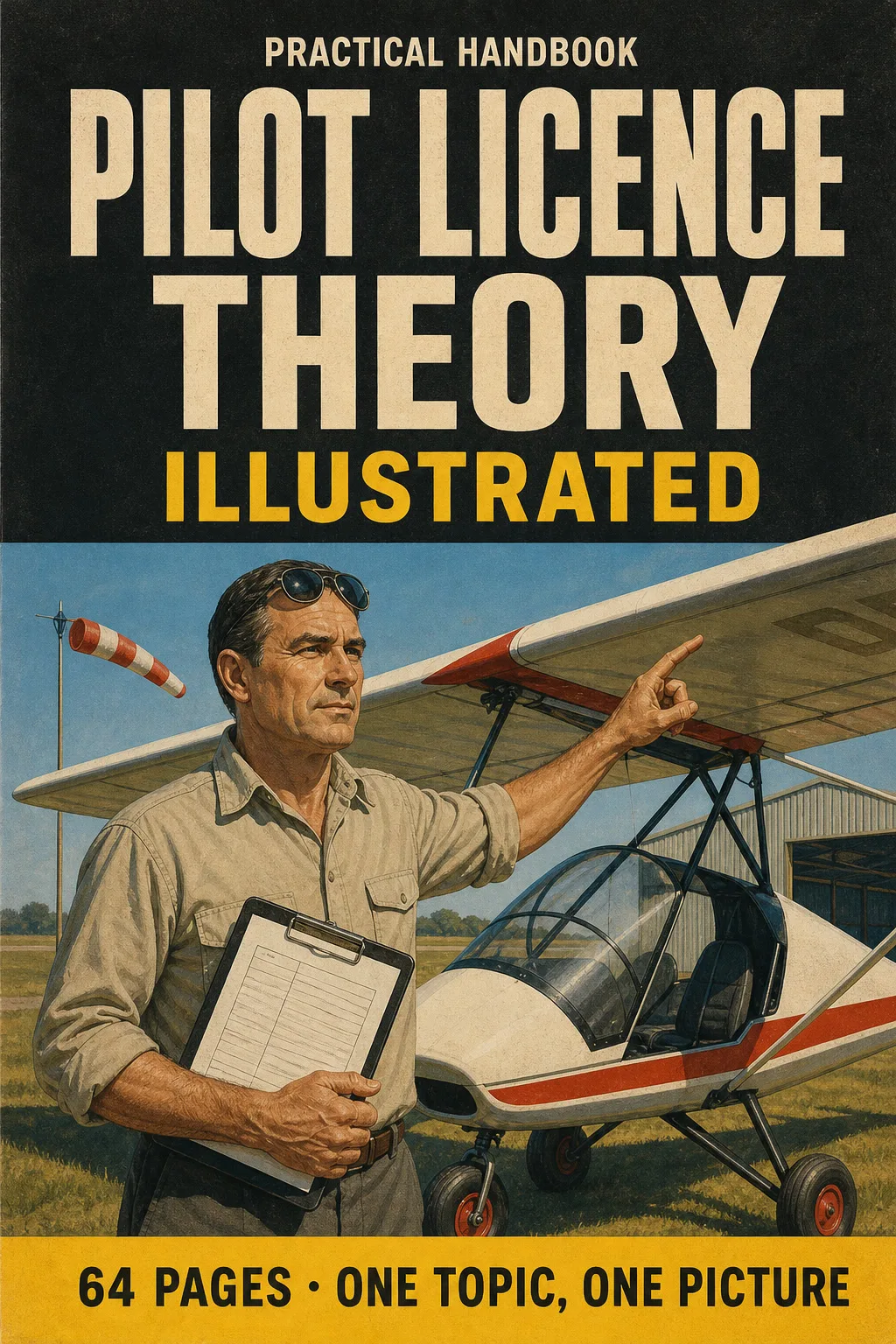
National Pilot Licence Theory, Illustrated All 7 Theory Subjects, Each Topic on Its Own Drawn Page

Airspace, the stall, the magneto check, centre of gravity, density altitude, the wind triangle, METARs and TAFs, hypoxia. Every topic has its own page: first the drawing, then what you need to remember. 64 illustrated pages.

YES, I WANT NPL THEORY ILLUSTRATED

🔒 Secure checkout · PDF by email · 30-day guarantee

Every topic, its own pageEvery rule and every calculation drawn, with the explanation alongside
64 illustrated pages9 parts, from the road to the NPL to exam-day revision
Up-to-date sourcesSA Civil Aviation Regulations 2011 (Parts 62 and 91) and SA-CATS
PDF by emailFormat

Look Inside the Book

Every page has one big drawing and a box with the numbers and rules you need to know:

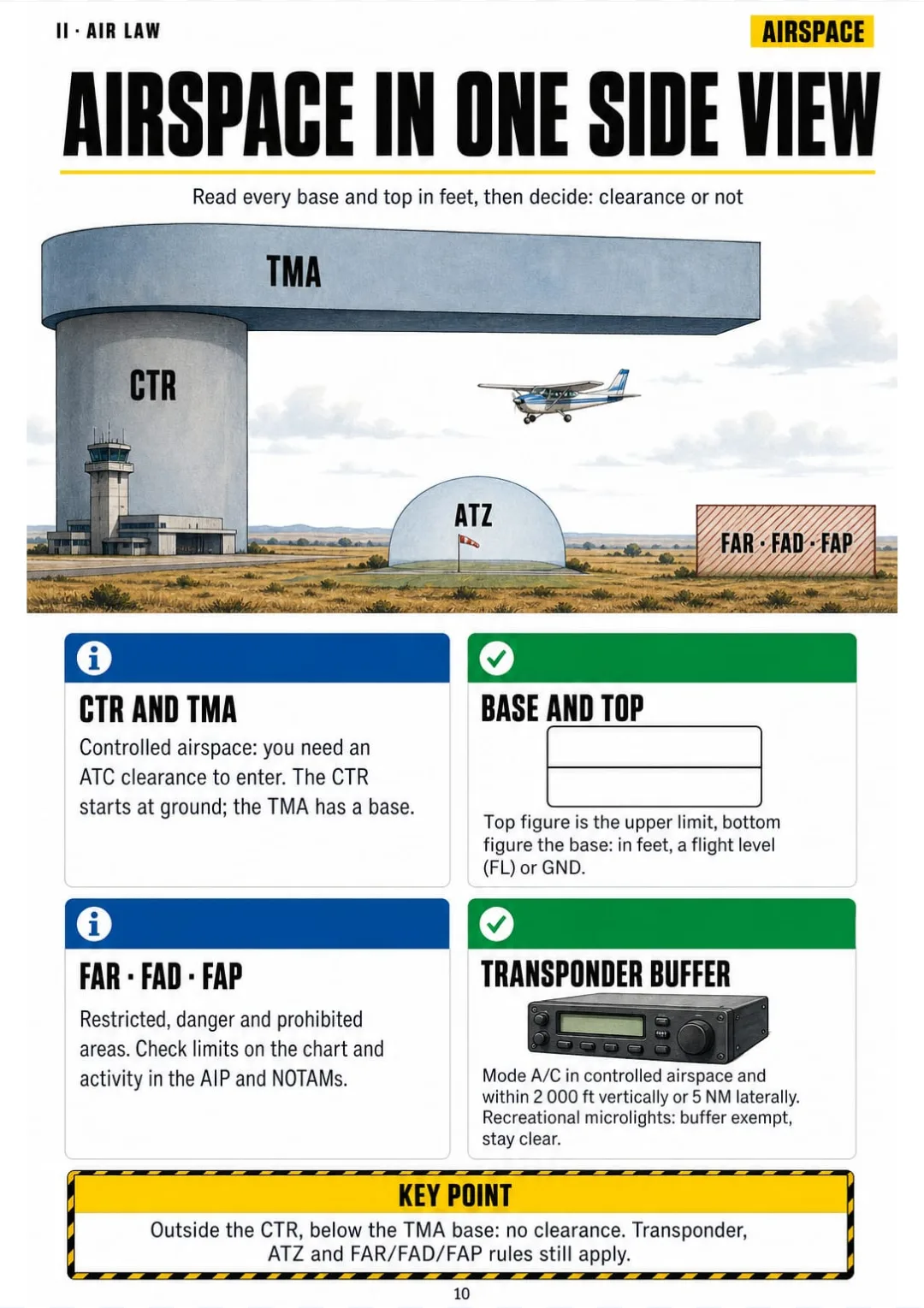
CTR from the ground, TMA above with a base, FAR/FAD/FAP on the chart, transponder 2 000 ft / 5 NM buffer (recreational microlights exempt)
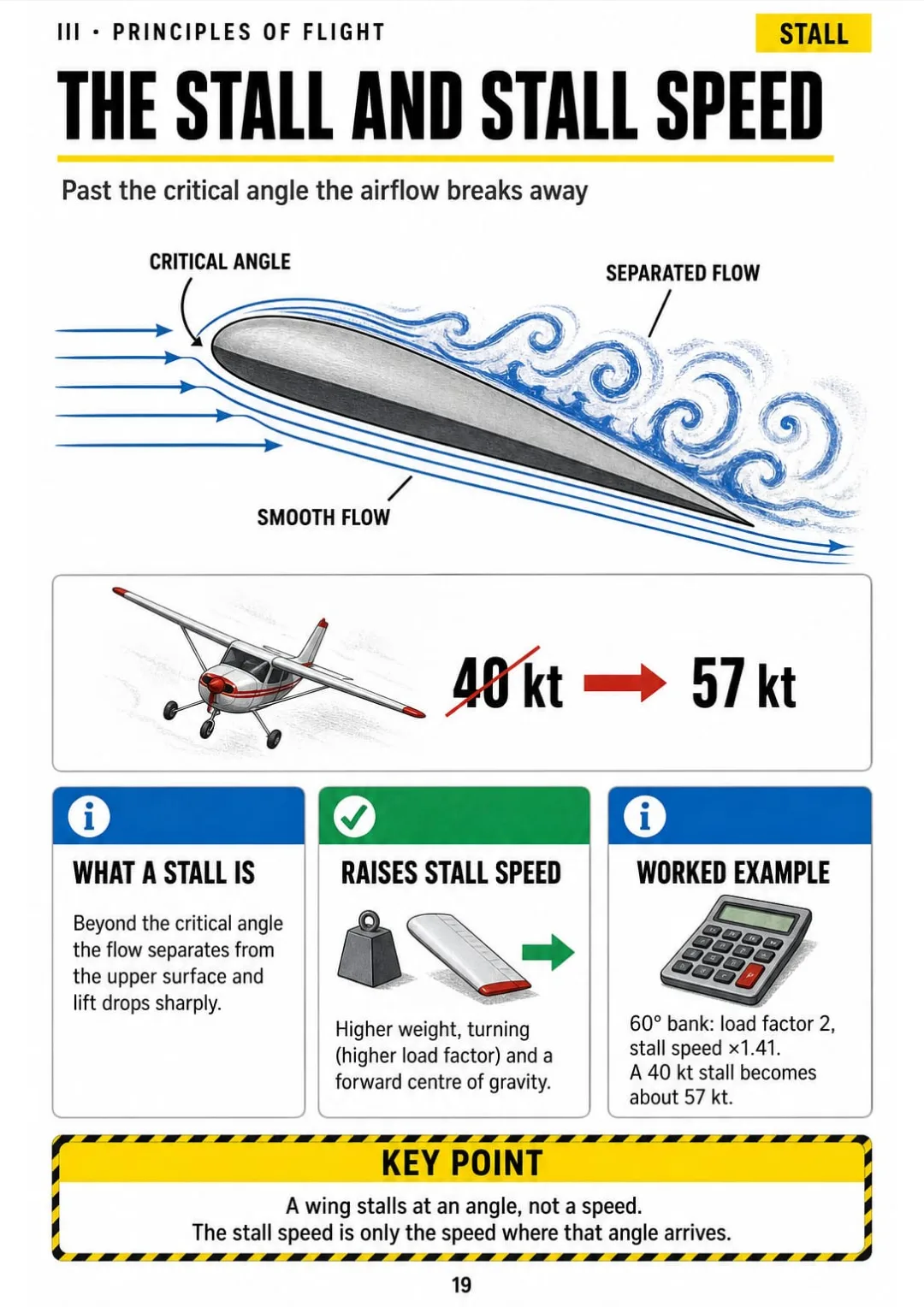
Stall = past the critical angle · 60° bank: 40 kt stall speed becomes about 57 kt
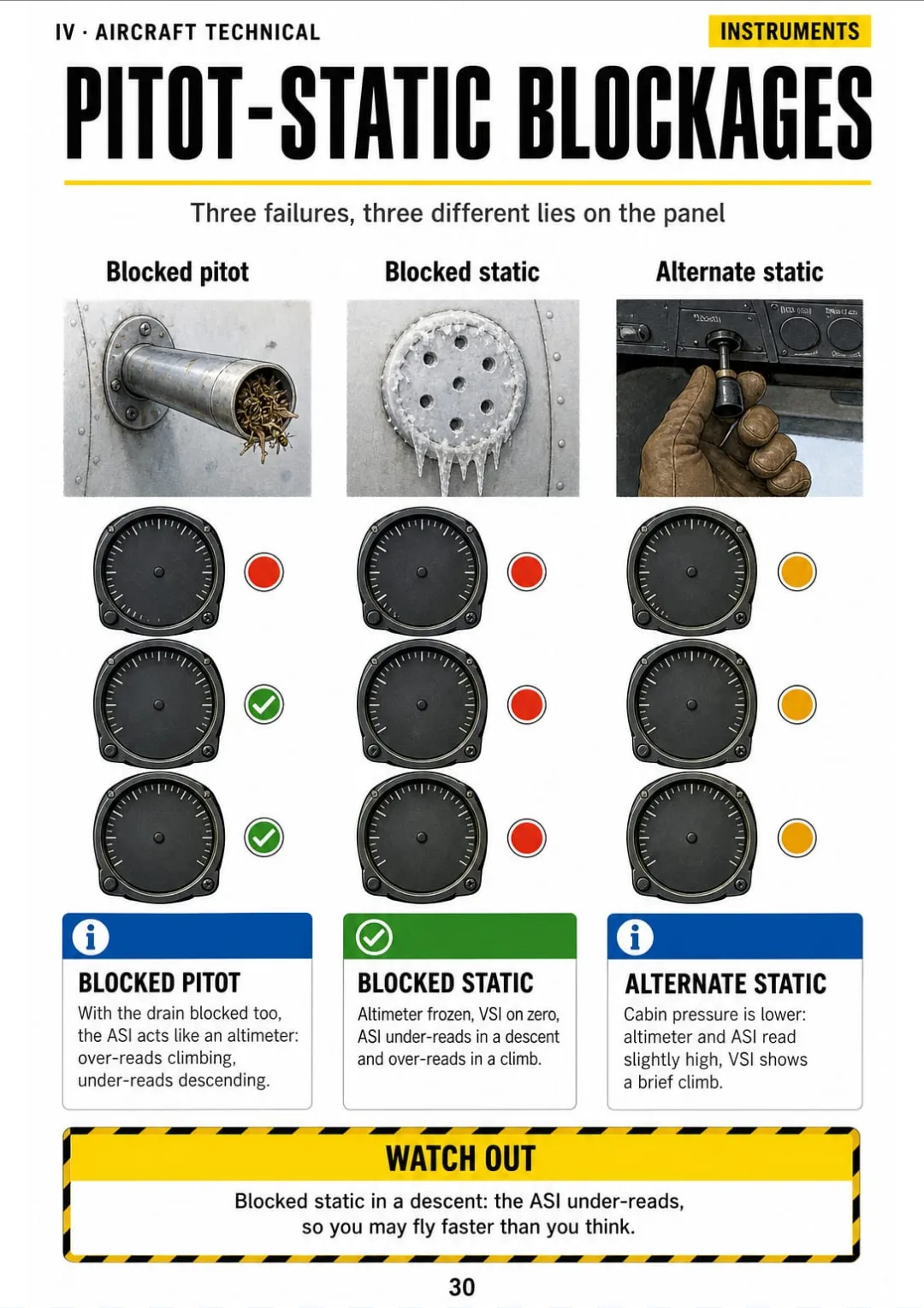
Blocked pitot: ASI acts like an altimeter. Blocked static: altimeter frozen, ASI under-reads descending.
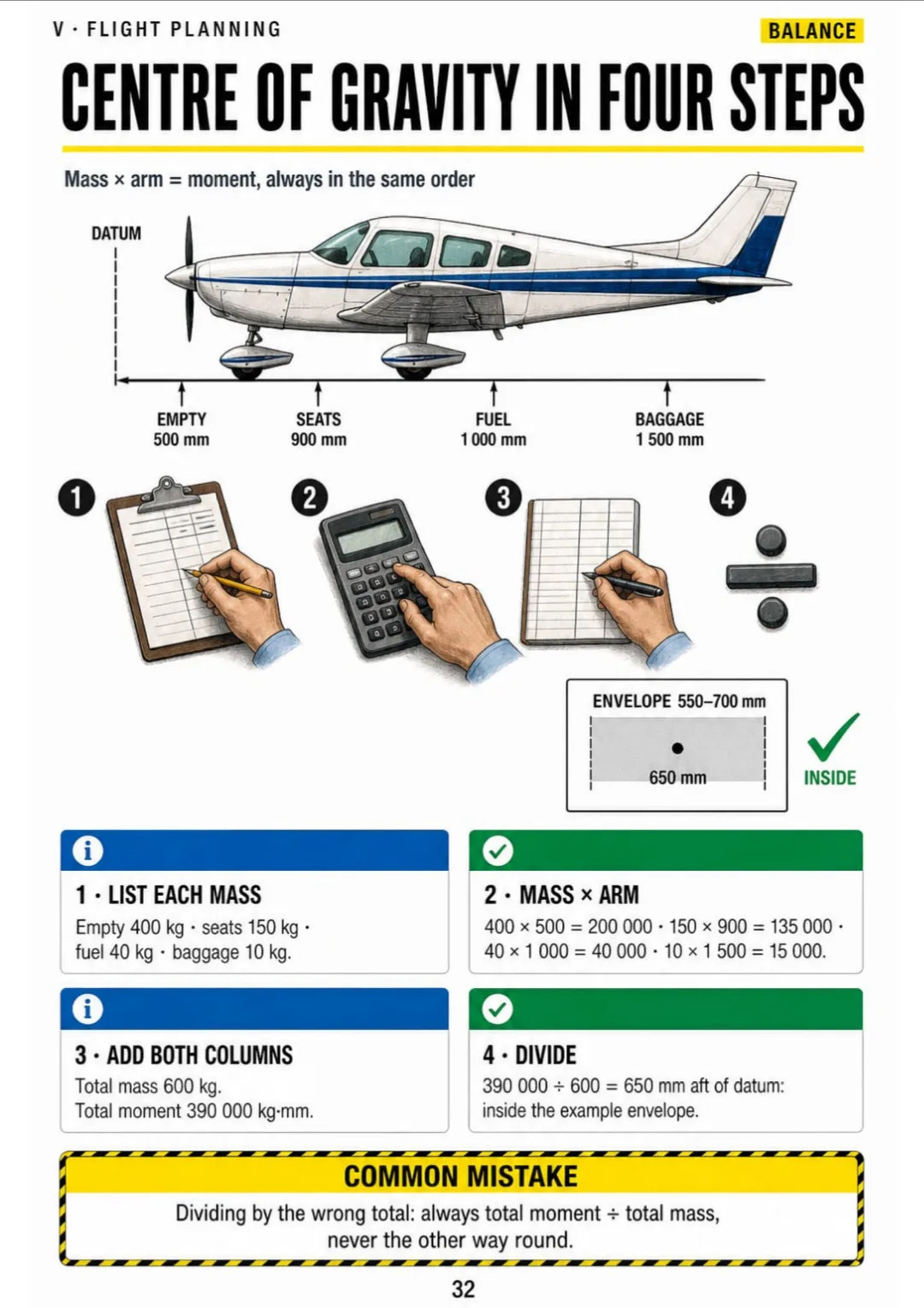
CG = total moment ÷ total mass: 390 000 ÷ 600 = 650 mm, inside the envelope
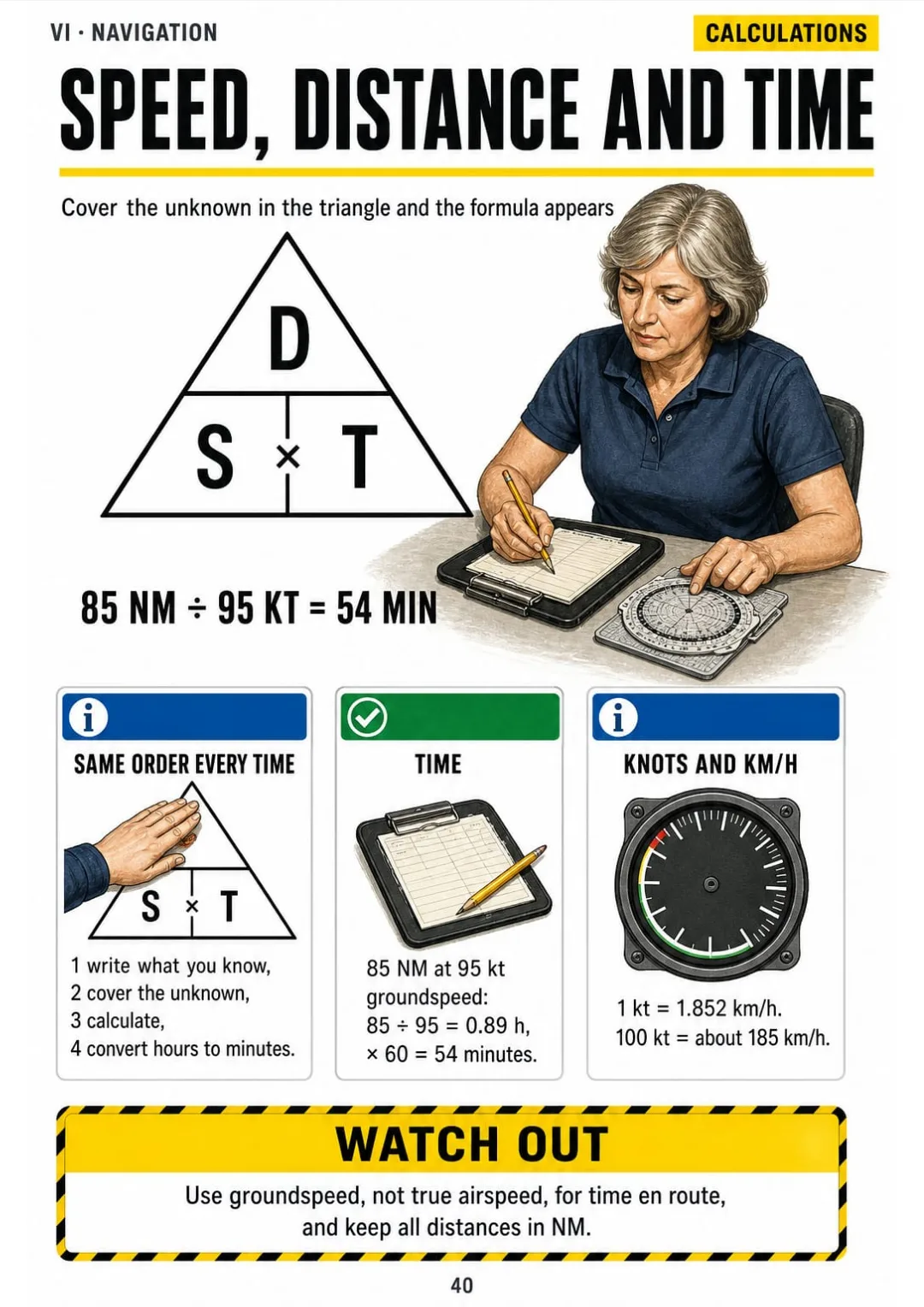
85 NM at 95 kt groundspeed = 54 minutes, with D = S × T
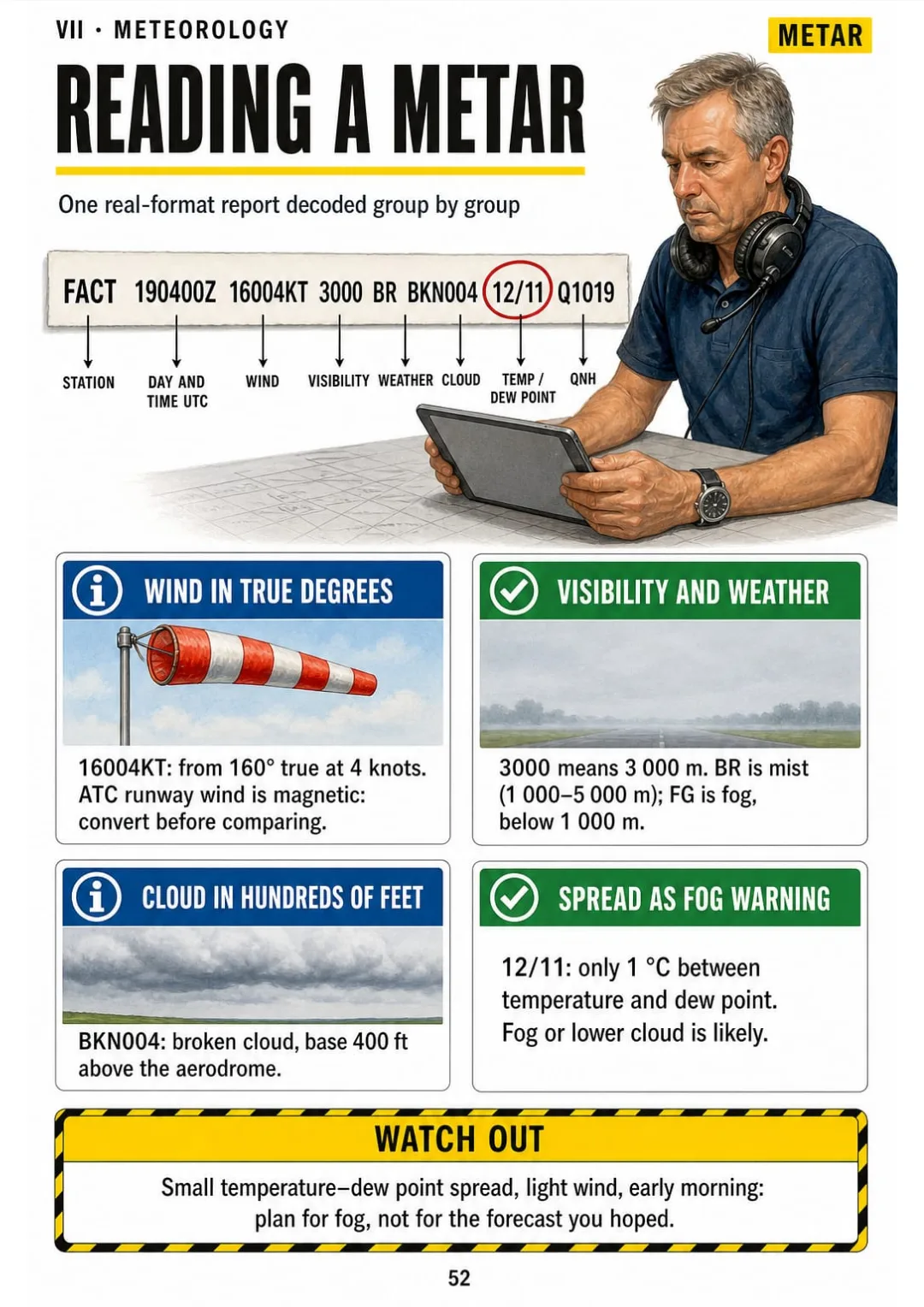
FACT 190400Z decoded: 12/11 means a 1 °C spread, fog likely
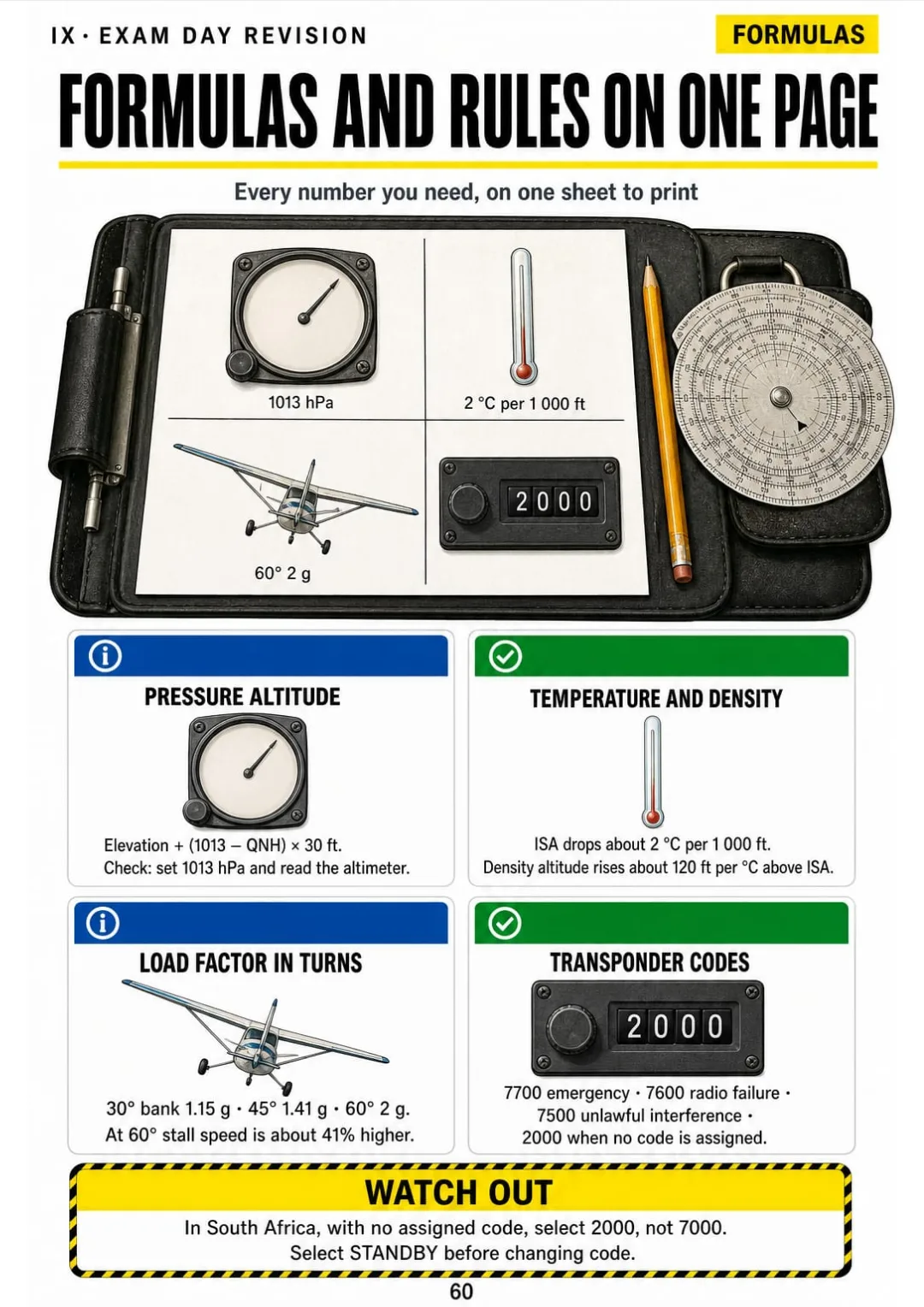
30 ft per hPa, 120 ft per °C, 60° bank = 2 g, 7700/7600/7500: all on one sheet.
CA 61-91, 7 days ahead, 45 minutes early: the checklist before you book.

Swipe to see more →

These are real pages from the book. The table of contents is the full one: 9 parts and 60 topics.

The Problem Isn't You. It's How It Was Explained.

You're at the holding point doing the run-up. Your instructor says: “Mag check. Talk me through it.” You switch to the left magneto, the needle moves, and you're not sure what that number means.

You read the ignition chapter twice. But the manual explains it in long paragraphs: dual ignition, P-leads, earthing, RPM drop limits, all in one block. Under pressure, a paragraph gives you nothing to picture.

Blocked pitot: ASI acts like an altimeter. Blocked static: altimeter frozen, ASI under-reads descending.

In this book, the magneto check is one page. The rev counter is drawn with three readings: a small drop that is normal, no drop at all that can mean a live magneto, and a big drop that means a fault.

The other subjects work the same way: the stall, centre of gravity, the wind triangle, QNH and QFE, reading a METAR. Each one has its own page.

At the next run-up you know what the needle should do, and why. You understand it, and you do it without going back to the manual.

COMPARE FOR YOURSELF

The Same Topic, Two Ways to Study It

THIS
  • The manual: line after line
  • The stall and stall speed explained only in words
  • You reach the theory exam with doubts
A stall occurs when the angle of attack of the wing exceeds the critical angle, typically in the region of 15 to 16 degrees, at which point the airflow over the upper surface separates and the coefficient of lift decreases rapidly. The stall is a function of angle of attack and not of airspeed; however, the published stall speed increases with mass and load factor, varying with the square root of the load factor, such that in a level turn at 60 degrees of bank the stall speed increases by approximately 41 per cent.
FOR THIS
  • The stall in one drawing
  • 60° bank: 40 kt becomes about 57 kt
  • You see it and you understand it
Stall = past the critical angle · 60° bank: 40 kt stall speed becomes about 57 kt
CONTENTS

Take a Look at the 9 Parts and 60 Topics

Your road to the NPL, Air Law, Principles of Flight, Aircraft Technical, Flight Planning and Performance, Navigation, Meteorology, Human Performance and Exam Day Revision: 64 pages, all illustrated.

IYour Road to the NPL · pp. 5-7
  1. The NPL Path on One Page
  2. The Seven Subjects at a Glance
  3. How to Use This Book
IIAir Law · pp. 8-15
  1. Who Makes the Rules
  2. Licence, Medical and Documents to Carry
  3. Airspace Side View
  4. VFR Weather Minima
  5. Right of Way
  6. Cruising Levels: the Semicircular Rule
  7. The Aerodrome Circuit
  8. Transponder Codes and Light Signals
IIIPrinciples of Flight · pp. 16-23
  1. The Four Forces
  2. How a Wing Makes Lift
  3. Angle of Attack Is Not Pitch Attitude
  4. The Stall and Stall Speed
  5. Drag: Induced and Parasite
  6. Turns and Load Factor
  7. Stability and the Three Axes
  8. How a Gyroplane Rotor Flies
IVAircraft Technical · pp. 24-30
  1. Two-Stroke and Four-Stroke Engines
  2. Carburettor Icing
  3. Ignition and the Magneto Check
  4. Fuel System and Fuel Types
  5. The Six Flight Instruments
  6. Reading the Airspeed Indicator
  7. Pitot-Static Errors
VFlight Planning and Performance · pp. 31-37
  1. Weight: From Empty to Take-Off
  2. Centre of Gravity in Four Steps
  3. Why a Rear CG Is Dangerous
  4. Pressure Altitude and Density Altitude
  5. Take-Off and Landing Distance
  6. Crosswind and Headwind Components
  7. Fuel Planning
VINavigation · pp. 38-45
  1. Latitude, Longitude and the Chart
  2. True, Magnetic and Compass
  3. Speed, Distance and Time
  4. The Wind Triangle Drawn
  5. Solving the Wind Triangle Step by Step
  6. The 1 in 60 Rule
  7. Map Reading and Checkpoints
  8. Lost Procedure and Diversion
VIIMeteorology · pp. 46-53
  1. The Standard Atmosphere
  2. QNH, QFE and the Altimeter
  3. Stability and Clouds
  4. Highveld Thunderstorms
  5. Fronts over South Africa
  6. Fog and Low Cloud
  7. Reading a METAR
  8. Reading a TAF
VIIIHuman Performance · pp. 54-59
  1. Hypoxia and Altitude
  2. Disorientation and the Inner Ear
  3. Vision and Lookout
  4. Alcohol, Medication and Fatigue
  5. Carbon Monoxide and Heat
  6. Decision Making and Threat Management
IXExam Day Revision · pp. 60-64
  1. Formulas and Rules on One Page
  2. Calculation Checklist
  3. Mix-Ups to Avoid
  4. Revision Plan by Subject
  5. Before You Book the Exam

One Page, One Topic, All Clear

Think of it this way:

You're planning a cross-country and the forecast gives you a 15-knot wind from the side. Before you can work out time and fuel, you need a heading and a groundspeed.

You open the wind triangle page and see it drawn: heading and TAS with one arrowhead, wind with three, track and groundspeed with two. Next to it, the same method step by step.

85 NM at 95 kt groundspeed = 54 minutes, with D = S × T

The same goes for airspace in one side view, centre of gravity in four steps, density altitude, reading a METAR and the 1 in 60 rule: each one on its own page.

Pilot Licence Theory Illustrated is 9 parts and 60 topics, all drawn, and it ends with a formula sheet, a calculation checklist, the mix-ups to avoid and a revision plan by subject.

What you see drawn, you don't have to memorize.

What's Inside Pilot Licence Theory Illustrated:

Ipp. 5-7

Your Road to the NPL

The NPL path on one page, the seven theory subjects at a glance and how to get the most out of each page.

IIpp. 8-15

Air Law

Who makes the rules, licence, medical and documents, airspace in side view, VFR minima, right of way, the semicircular rule, the circuit, transponder codes and light signals.

IIIpp. 16-23

Principles of Flight

The four forces, how a wing makes lift, angle of attack versus pitch attitude, the stall, drag, turns and load factor, stability and the gyroplane rotor.

IVpp. 24-30

Aircraft Technical

Two-stroke and four-stroke engines, carburettor icing, the magneto check, fuel systems and types, the six flight instruments, the airspeed indicator and pitot-static errors.

Vpp. 31-37

Flight Planning and Performance

Mass from empty to take-off, centre of gravity in four steps, why a rear CG is dangerous, density altitude, take-off and landing distance, wind components and fuel planning.

VIpp. 38-45

Navigation

Latitude and longitude, true, magnetic and compass, speed, distance and time, the wind triangle drawn and solved, the 1 in 60 rule, map reading and the lost procedure.

VIIpp. 46-53

Meteorology

The standard atmosphere, QNH and QFE, stability and clouds, Highveld thunderstorms, fronts over South Africa, fog and low cloud, METARs and TAFs.

VIIIpp. 54-59

Human Performance

Hypoxia, disorientation and the inner ear, vision and lookout, alcohol, medication and fatigue, carbon monoxide and heat, and decision making.

IXpp. 60-64

Exam Day Revision

The formulas and rules on one page, a calculation checklist, the mix-ups to avoid, a revision plan by subject and what to check before you book.

At the end of the book: A formula sheet, a calculation checklist, the mix-ups to avoid and a revision plan by subject.
Plus: 2 Free Books

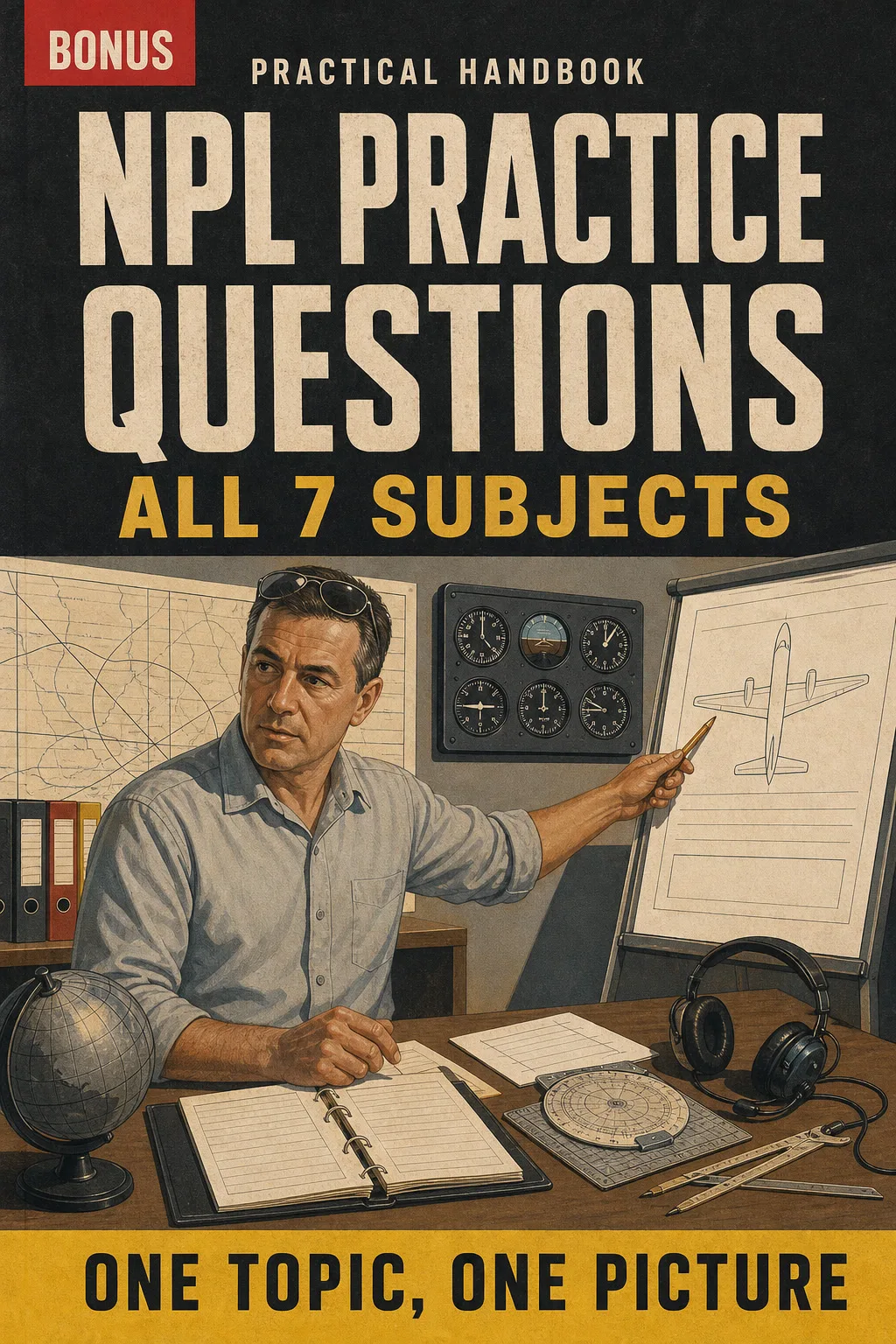
NPL Practice Questions: All 7 Subjects

BONUS 1: «NPL Practice Questions: All 7 Subjects»

Value on its own: US$ 17.90

Test yourself subject by subject with exam-style questions and explained answers, so you know exactly which topic to revise before you book the next theory exam.

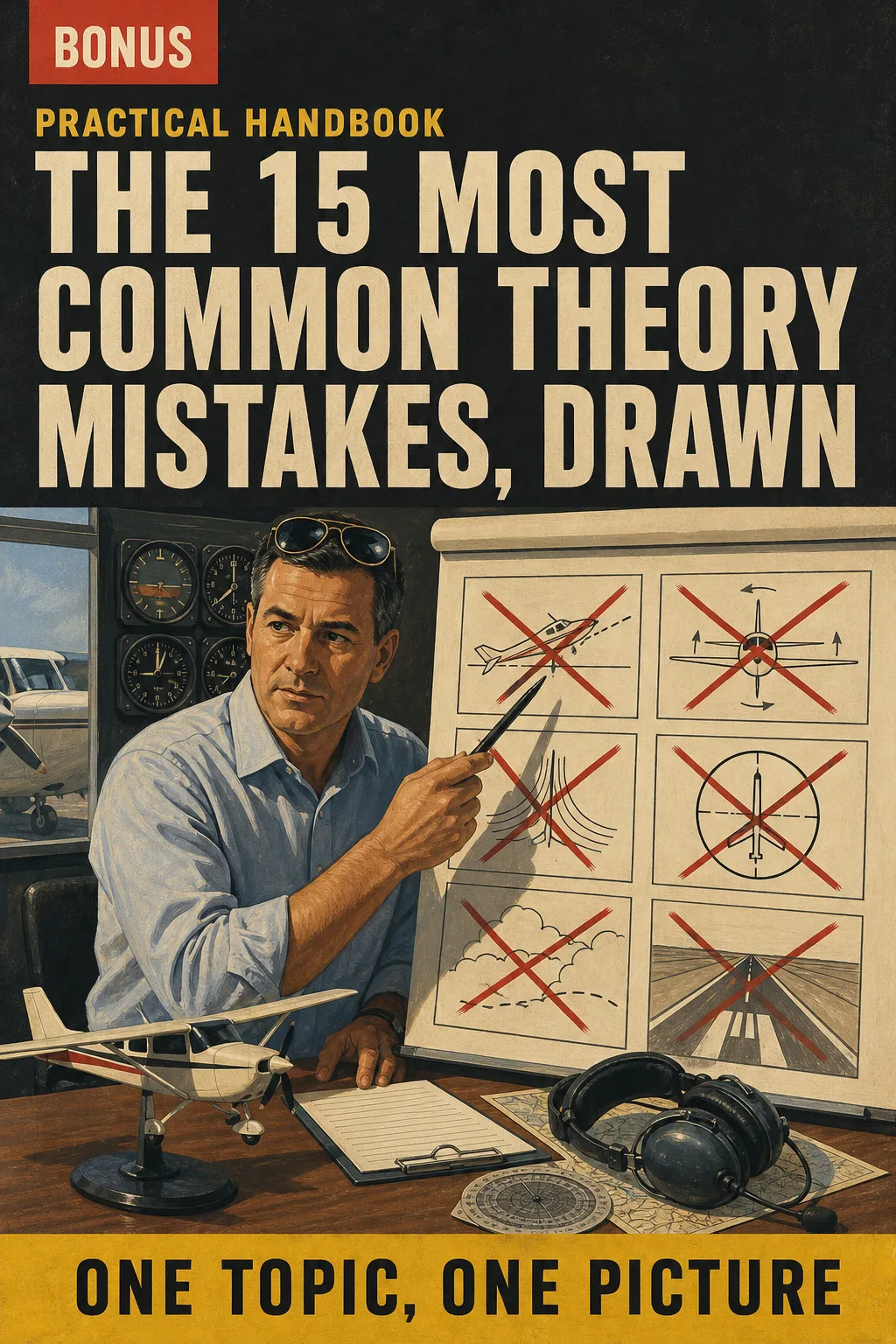
The 15 Most Common Theory Mistakes, Drawn

BONUS 2: «The 15 Most Common Theory Mistakes, Drawn»

Value on its own: US$ 14.90

See the mistakes student pilots make most often, wrong and right side by side, and fix them before exam day instead of in the exam room.

Pilot Licence Theory Illustrated with 2 Free Books

  • Pilot Licence Theory Illustrated: 64 illustrated pagesUS$ 63
  • BONUS 1: NPL Practice Questions: All 7 SubjectsUS$ 17.90
  • BONUS 2: The 15 Most Common Theory Mistakes, DrawnUS$ 14.90
  • High-resolution PDF to printIncluded
Total value US$ 95.80
YOUR PRICE:
US$ 27
You save US$ 68.80
YES, I WANT PILOT LICENCE THEORY ILLUSTRATED FOR US$ 27

📄 This is a digital PDF book sent to your email: nothing is printed or shipped.

Secure purchaseEncrypted payment30-day guarantee

PDF by email: We email you Pilot Licence Theory Illustrated as a PDF, together with the two free books. It's a single payment: no installments, no extra charges.

Who This Book Is For

You're starting NPL theory

You're starting NPL theory

You get all seven subjects in the order you'll sit them, one topic per page, so each evening of study builds on the last.

Your theory exams are booked

Your theory exams are booked

You revise subject by subject with the formula sheet, the calculation checklist and the mix-ups page, and you see which topic still needs work.

You already fly with your licence

You already fly with your licence

You keep it printed in your flight bag to refresh airspace, METARs, density altitude or the magneto check before a flight or a renewal.

Everything You Get Today

US$ 95.80US$ 27
YES, I WANT PILOT LICENCE THEORY ILLUSTRATED FOR US$ 27

📄 This is a digital PDF book sent to your email: nothing is printed or shipped.

30DAYS
GUARANTEE

30-Day Guarantee

Try Pilot Licence Theory Illustrated for 30 days, bonus books included.

We refund everything if the file won't open, if the book isn't what you see here, if you were charged twice or if the email doesn't arrive. Just email us.

You pay once. No subscriptions.

Frequently Asked Questions

Is it for me if I'm training for the NPL on microlights, LSA or gyroplanes?

Yes. It follows the seven South African National Pilot Licence theory subjects, uses the units you'll meet in South Africa (knots, feet, hectopascals, kilograms and litres) and includes a page on how a gyroplane rotor flies. It isn't a foreign PPL book.

Where does the content come from?

Every rule and figure is checked against the current South African Civil Aviation Regulations, 2011 (Part 62 and Part 91) and the related SA-CATS technical standards. Regulations are amended from time to time, so before your exam, confirm any figure with your school or the current SACAA text.

Is it official material?

No. It's independent study material. It is not affiliated with or endorsed by the SACAA or any flight school.

Does it replace my flight school or instructor?

No. Your ground school, flight training and instructor come first. This sits next to your school manuals: the same topics, one drawing per page, with the numbers in a box, so you can revise a subject in an evening instead of rereading chapters.

Are the practice questions the ones in the exam?

No. They are written for this book to help you practise each subject. They are not official exam questions.

When and how do I get it?

The book and the 2 free books arrive as PDFs by email, at the address you enter at checkout.

Do I have to pay every month?

No. It's a one-off payment, with no subscription.

Can I have it on paper?

Yes. The PDF prints well at home or at a print shop, so you can keep it in your flight bag.

How does the refund work?

You have 30 days. We refund everything if the file won't open, if the book isn't what you see on this page, if you were charged twice or if the email doesn't arrive: just email us.

Before You Close This Page

No more rereading with nothing left the next day.

The wind triangle: you see it drawn, and that's it.

You walk into the theory exam knowing where everything is.

Drawings make studying faster.

The book is right below.

One-time payment: US$ 27 · Guarantee: 30 days · PDF by email

YES, I WANT PILOT LICENCE THEORY ILLUSTRATED FOR US$ 27

📄 This is a digital PDF book sent to your email: nothing is printed or shipped.